Da Lat fog season: best months, best hours, where to go
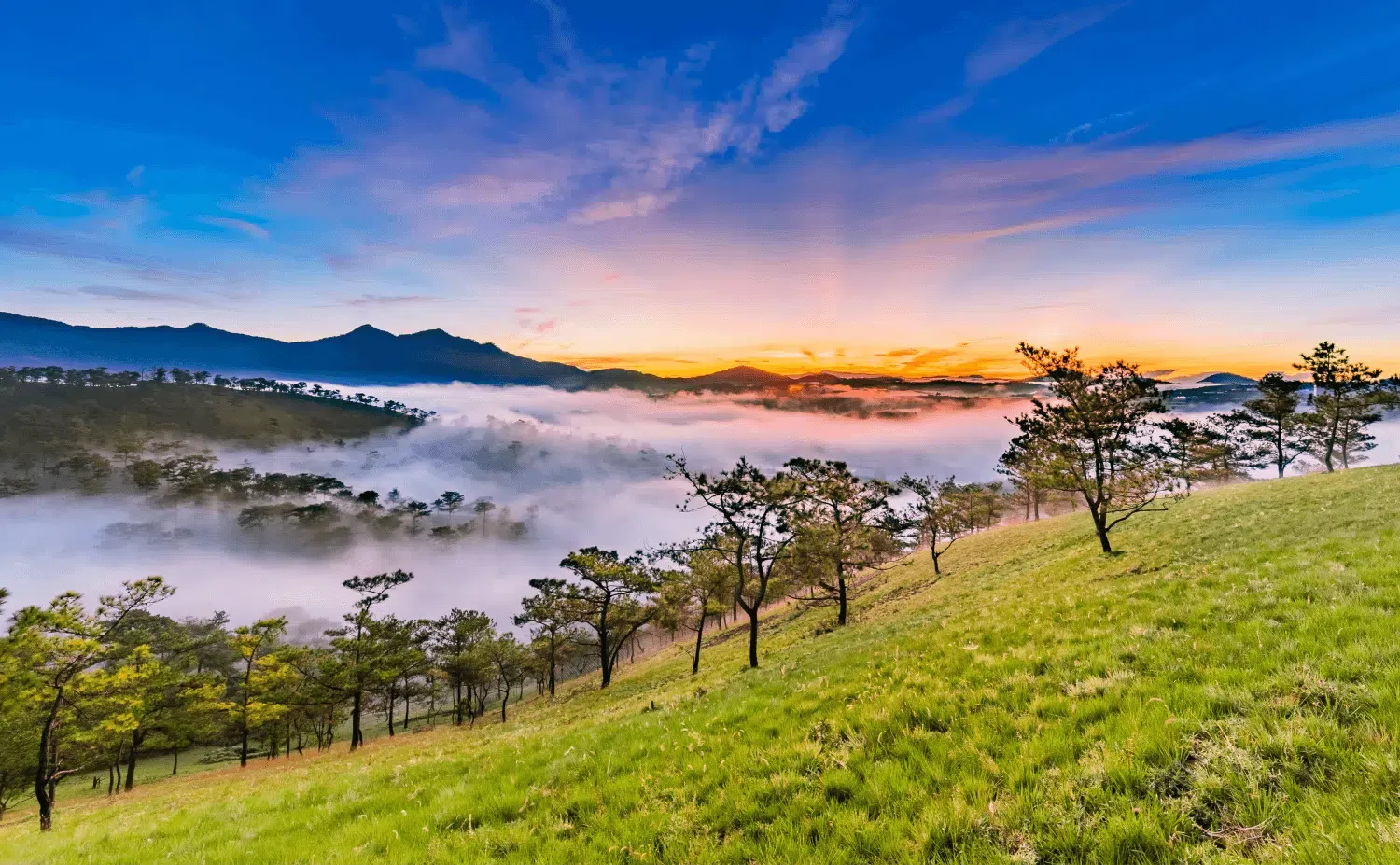
Table of Contents
1. Which months are Da Lat’s foggy season?
The best fog comes in the dry season, December to March; from May to October it is the rainy season, and the grey is mostly low cloud. Da Lat sits at 1,500m on the Lam Vien plateau. Daytime temperatures usually sit around 21–25°C, but nights and early mornings drop to 11–16°C, coldest in December and January. That ten-degree gap between night and day at this altitude is what produces the fog the city is named after.
Fog turns up in every month of the year. But there are two very different kinds of it, and this is where most trips go wrong:
- December to March — the dry season, and your safest bet. Clear skies, little rain and cold nights, so at dawn the fog settles low over the valley and slowly burns off. This is the fog and the “sea of cloud” worth setting an alarm for. February is the driest month — about 10mm of rain across just 2 rainy days — and the sunniest, at roughly 8.5 hours of sunshine a day (Da Lat station data compiled by Climates to Travel).
- May to October — the rainy season, easy to be disappointed. It is still grey, but that grey is low cloud and afternoon rain, not a thin layer of fog drifting over the hills. September is the wettest, around 280mm across 24 rainy days, and from August to October there are only about 4.5 hours of sunshine a day.
- April and November — shoulder months. Unpredictable: some mornings are superb, others rain straight through. Check the forecast close to the day.
If you want flowers as well, the calendar falls at either end of the year: wild sunflowers from October to December; pink grass from late October to mid-December, at its brightest from mid-November into early December; and cherry blossom from late January to mid-February. In short, the best overlap of fog and flowers is December through February; November has the flowers but, as a shoulder month, less reliable fog.
On foggy nights a charcoal grill helps — Xom Leo runs 3pm to 11pm, see the grill menu.
2. The best hours of the day to see it
Da Lat fog is a morning affair, and earlier than most people expect. Cloud and fog are thickest around sunrise — the best of it falls in roughly the 30 minutes either side of first light. Sunrise in Da Lat shifts with the season, from about 5:20am (late May) to 6:10am (late January), so in the dry season the best window is about 5:30–6:30am.
The pink grass hills are the exception: stay a little later, from sunrise to about 7am. The grass only takes on its pink tone once early sunlight passes through it; before dawn it just reads as pale grey.
Once the sun climbs, usually after 8am to 9am, the fog is mostly gone. So if you are starting from the city centre, allow for the drive and aim to be at your viewpoint before 5:30am.
Late afternoon on the higher hills also brings fog down. It is thinner than at dawn, but you get the sunset in exchange.
3. Where to watch the fog in Da Lat
The four easiest places to watch the fog are Cau Dat Tea Hill (fog lying over the tea rows), Langbiang Peak (the widest view), Robin Hill (close to the centre, though the cable car does not run at sunrise) and Bali Heaven Gate plus the Da Phu and Thien Phuc Duc hills near town. Details for each follow.
3.1. Cau Dat Tea Hill
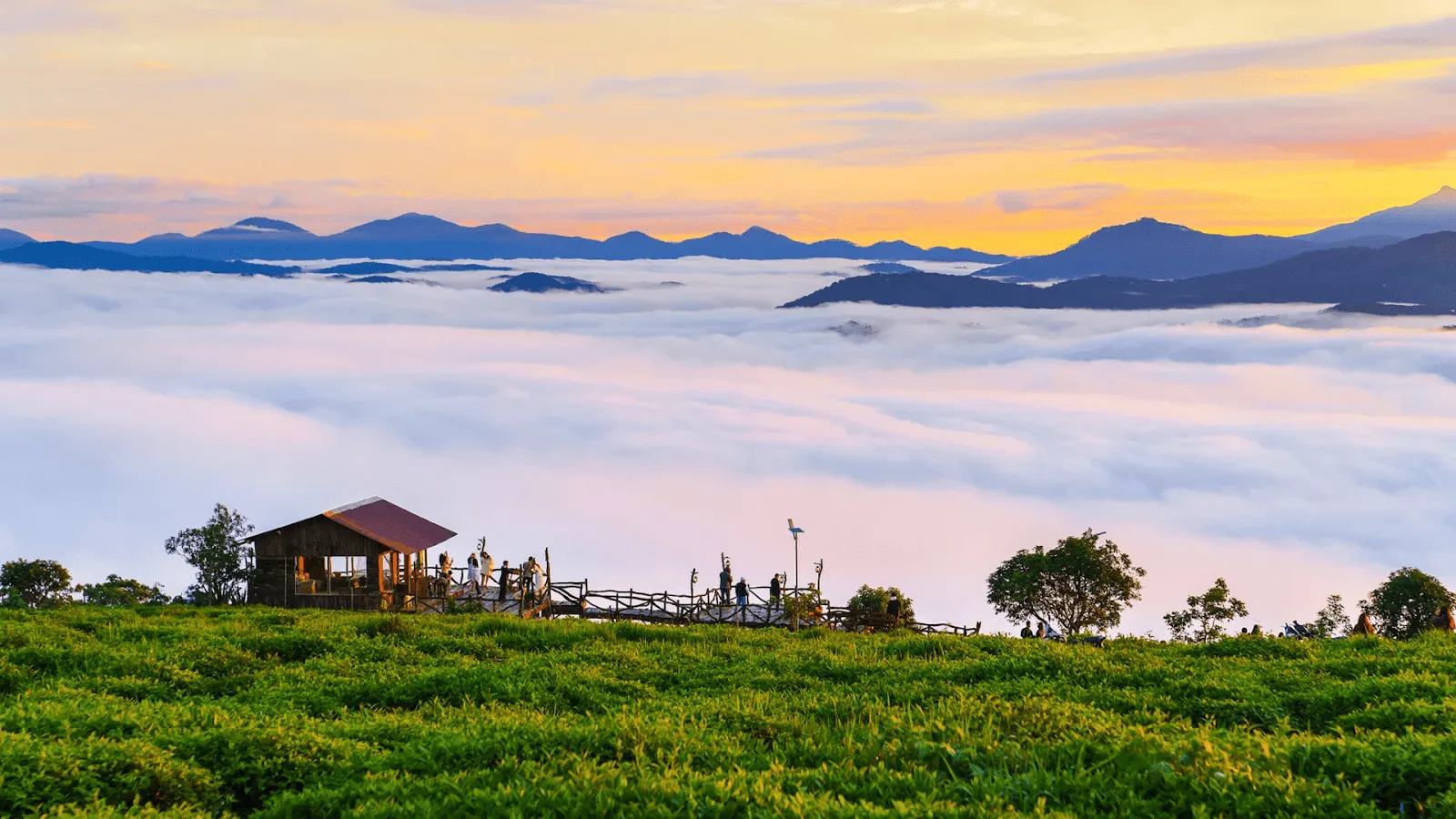
The name everyone mentions first. Rows of tea run down the slope below you and the fog sits across them like a white floor — that contrast is why Cau Dat tops every list. There is also a tea museum here for after the fog burns off.
3.2. Langbiang Peak
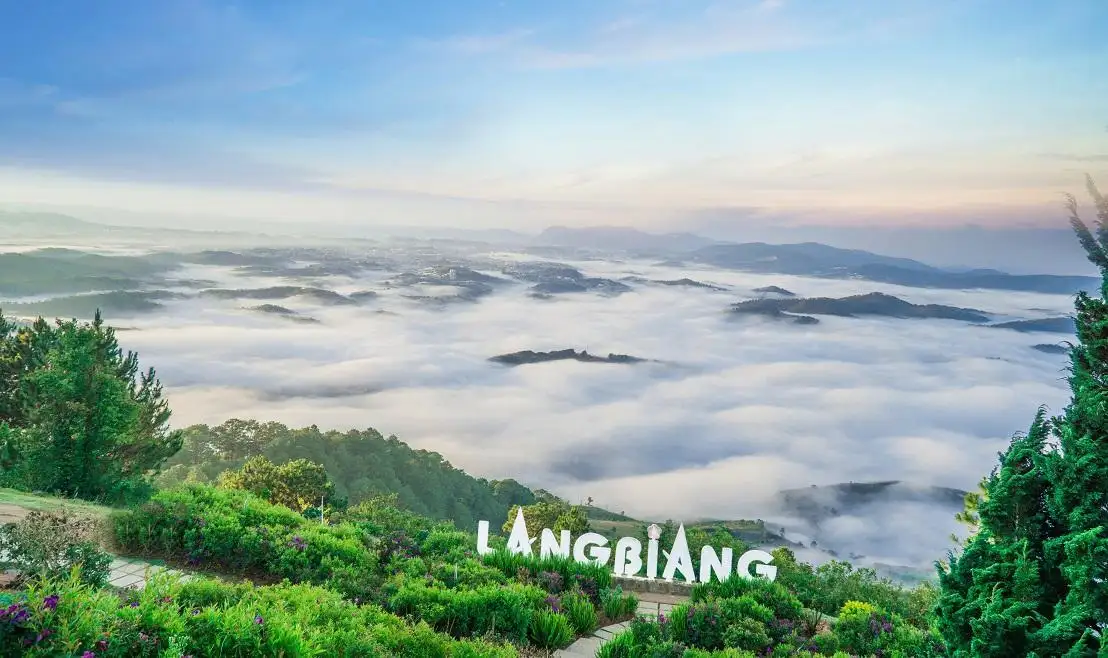
The highest peak in the area, so the widest view. Many people camp overnight to avoid riding up in the dark. Routes and ticket prices are in our Langbiang guide.
3.3. Robin Hill
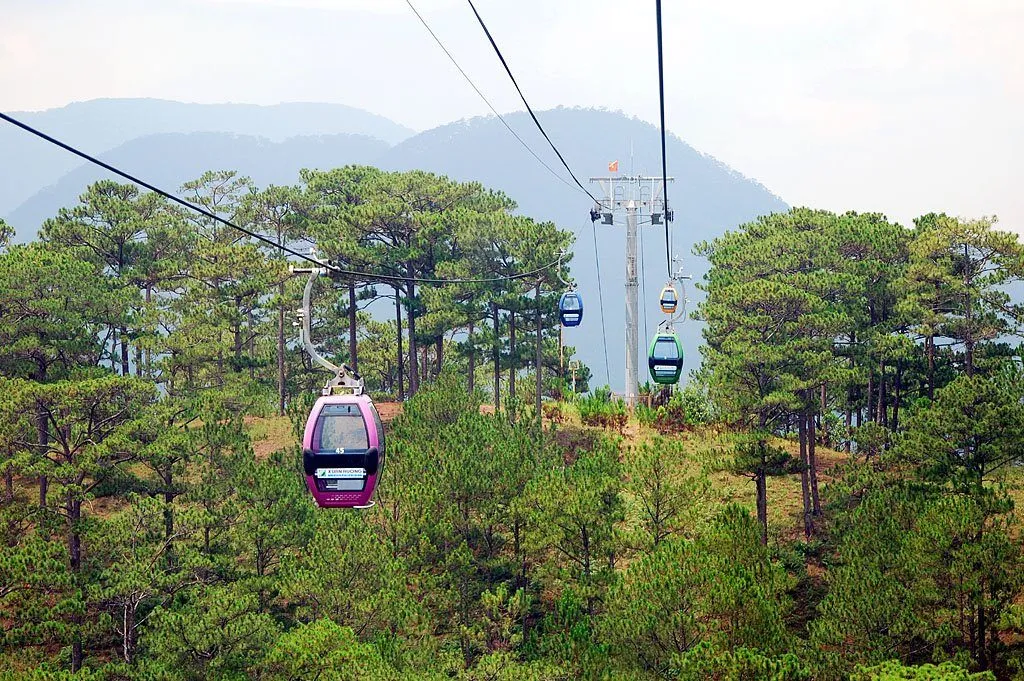
Closer to the centre than Cau Dat or Langbiang, but the cable car does not run at sunrise, so check with the management whether you can reach the hilltop that early. Opening hours and practical tips are in our Robin Hill guide.
3.4. Bali Heaven Gate and the hills near the centre
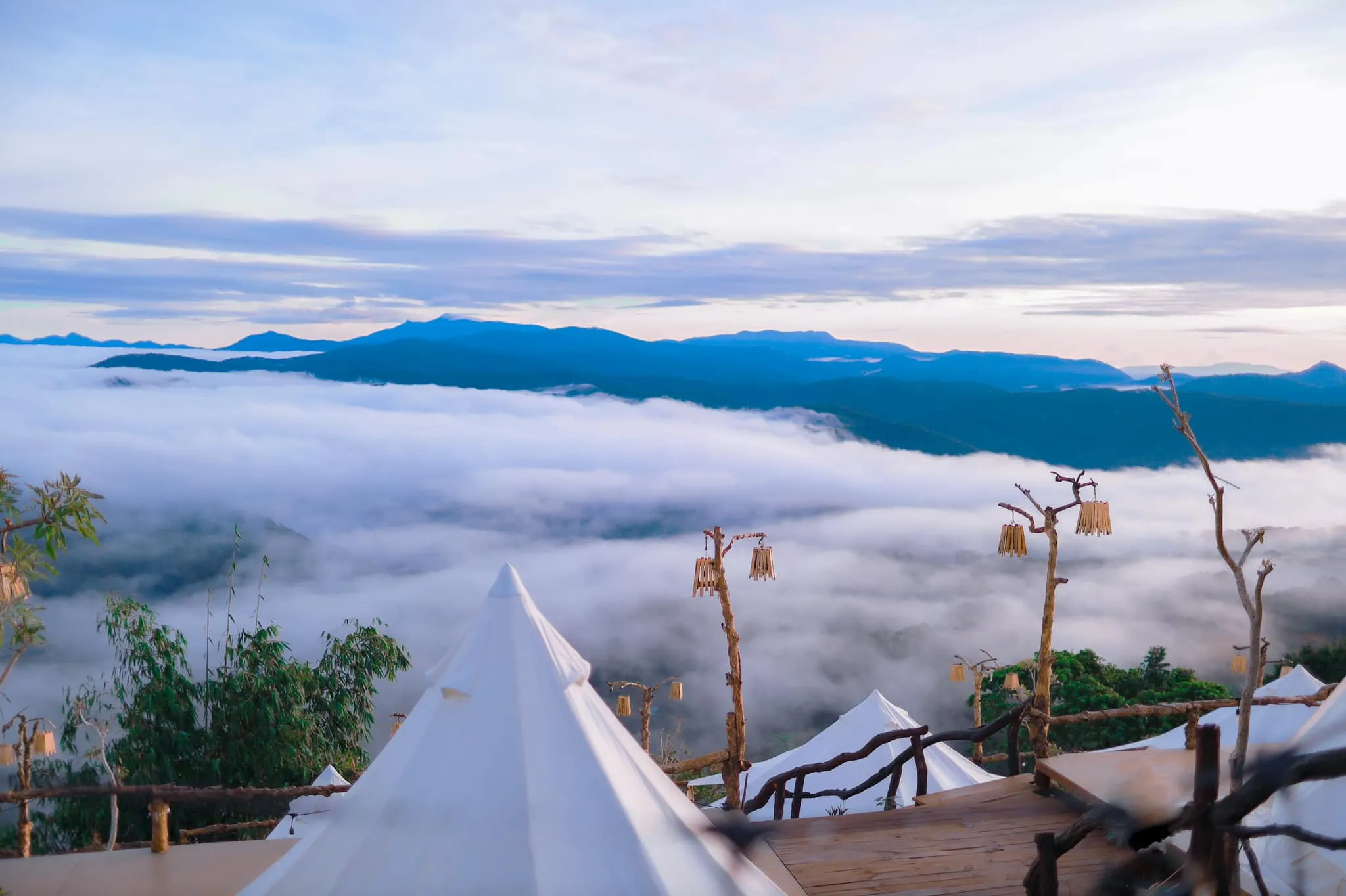
If you would rather not travel far, Bali Heaven Gate gives you drifting fog first thing in the morning. Two more names local cloud hunters use are Da Phu Hill and Thien Phuc Duc Hill — both close to the centre and good for a morning when you are short on time.
4. What to bring for an early fog morning
-
A proper warm jacket: 5am on a hill is far colder than in town, and there is wind on top of that.
-
A torch, or your phone light: most viewpoints have no street lighting and you will set off in the dark.
-
Shoes with grip: grass and hillside soil hold the dew and get very slippery.
-
Check your bike or car first: the roads up are steep and winding, and fog leaves the surface damp and cuts visibility.
-
Leave 30 minutes earlier than you think: the best fog lasts only a short window, and arriving late means missing it.
5. Once the fog lifts, what next?
A fog morning is usually over before 9am, which leaves you the whole day. Coming down from the hills, most people want a hot breakfast first — we keep a list of 30 breakfast spots in Da Lat — or somewhere to sit on, and a few of our 23 favourite Da Lat cafés are cloud-watching spots in their own right. If you want to close it with a warm evening, Xom Leo Grill & Chill is at 113 Huynh Tan Phat, Phuong Xuan Truong, looking straight out over the Trai Mat valley.
What makes it different is the night train that passes right in front around 6:40–7pm and 8:45–9:10pm (it leaves Da Lat Station at 6:15pm and 8:20pm and only runs with enough passengers) — the fog comes down, the greenhouse lights switch on, the train goes by. You will not find that combination anywhere in the centre.
📍 Address: 113 Huynh Tan Phat, Xuan Truong Ward - Da Lat, Lam Dong
📞 Reservations: 076.45.27.336
If you are planning a whole trip rather than just one morning, see our full Da Lat travel guide for a complete itinerary.