Da Lat Train Station – One of Da Lat’s Most Vintage Photo Spots (2026)
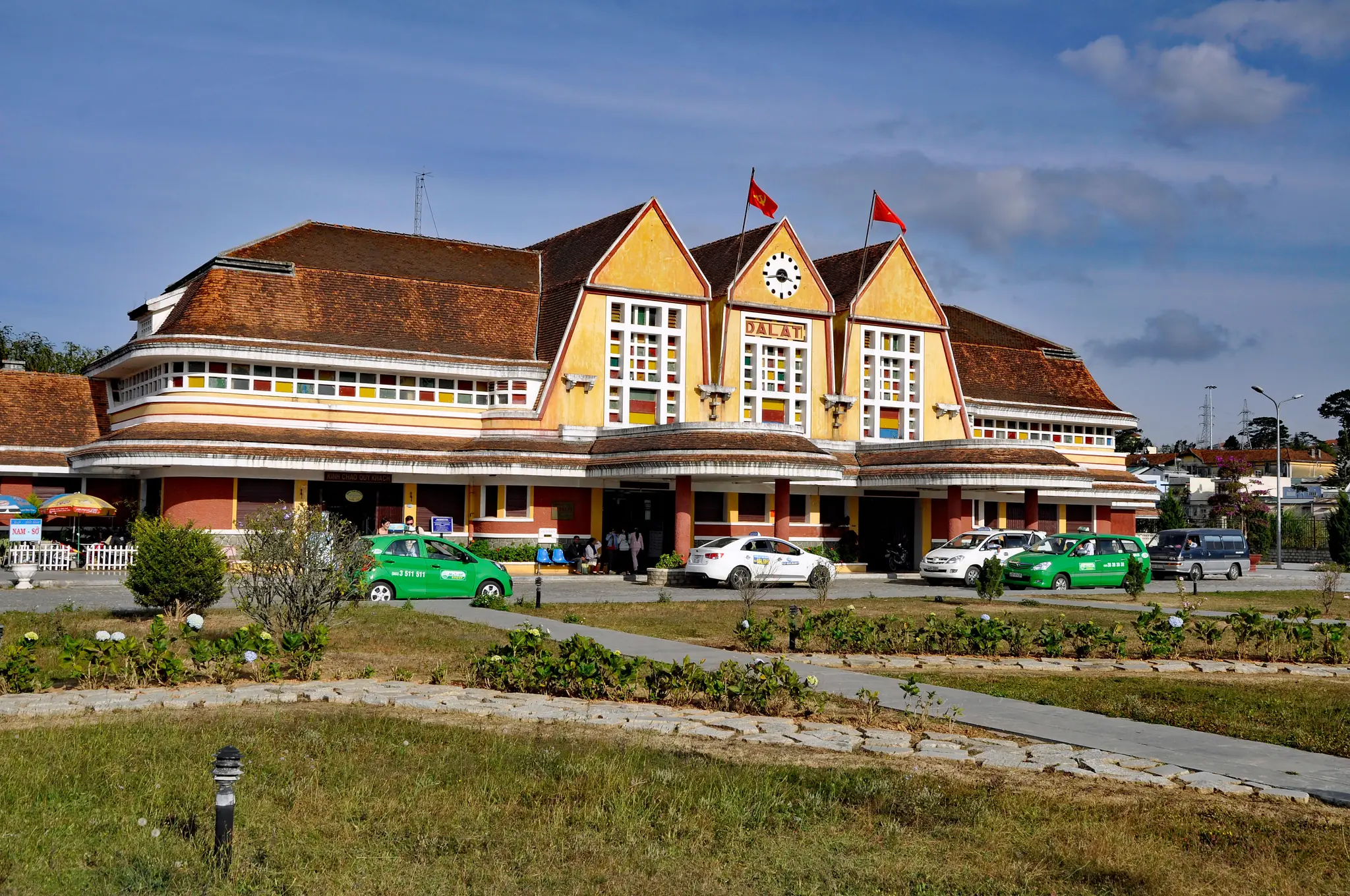
Table of Contents
- 1. Overview of Da Lat train station
- 2. When was Da Lat train station built?
- 3. Explore the unique architecture of Da Lat’s ancient train station
-
4. The best photo spots at Da Lat train station
- 4.1. Main gate of Da Lat train station
- 4.2. Ticket purchasing waiting room area at Da Lat train station
- 4.3. Old wooden train cars at Da Lat train station
- 4.4. Railway track area at Da Lat train station
- 4.5. Ancient steam locomotive - Unique symbol at Da Lat train station
- 4.6. The space inside an ancient train car at Da Lat train station
- 5. Suggested tourist attractions near Da Lat train station that should not be missed
- 6. Suggested delicious restaurant after exploring Da Lat train station: Xom Leo Grill & Chill
- 7. FAQ – Da Lat train station
Da Lat Railway Station is one of the most beautiful ancient stations in Indochina, imbued with French architecture and closely associated with the development history of the city of flowers. With its characteristic triangular roof design, rare cog rails and ancient train carriages, this place is not only a work of historical value but also a popular tourist attraction.
Currently, Da Lat Station has become a photo spot not to be missed thanks to its nostalgic and artistic space. This is an ideal stop for those who want to learn about the city’s past and preserve beautiful moments in their journey to explore Da Lat.
1. Overview of Da Lat train station
1.1. Address and how to get to Da Lat train station
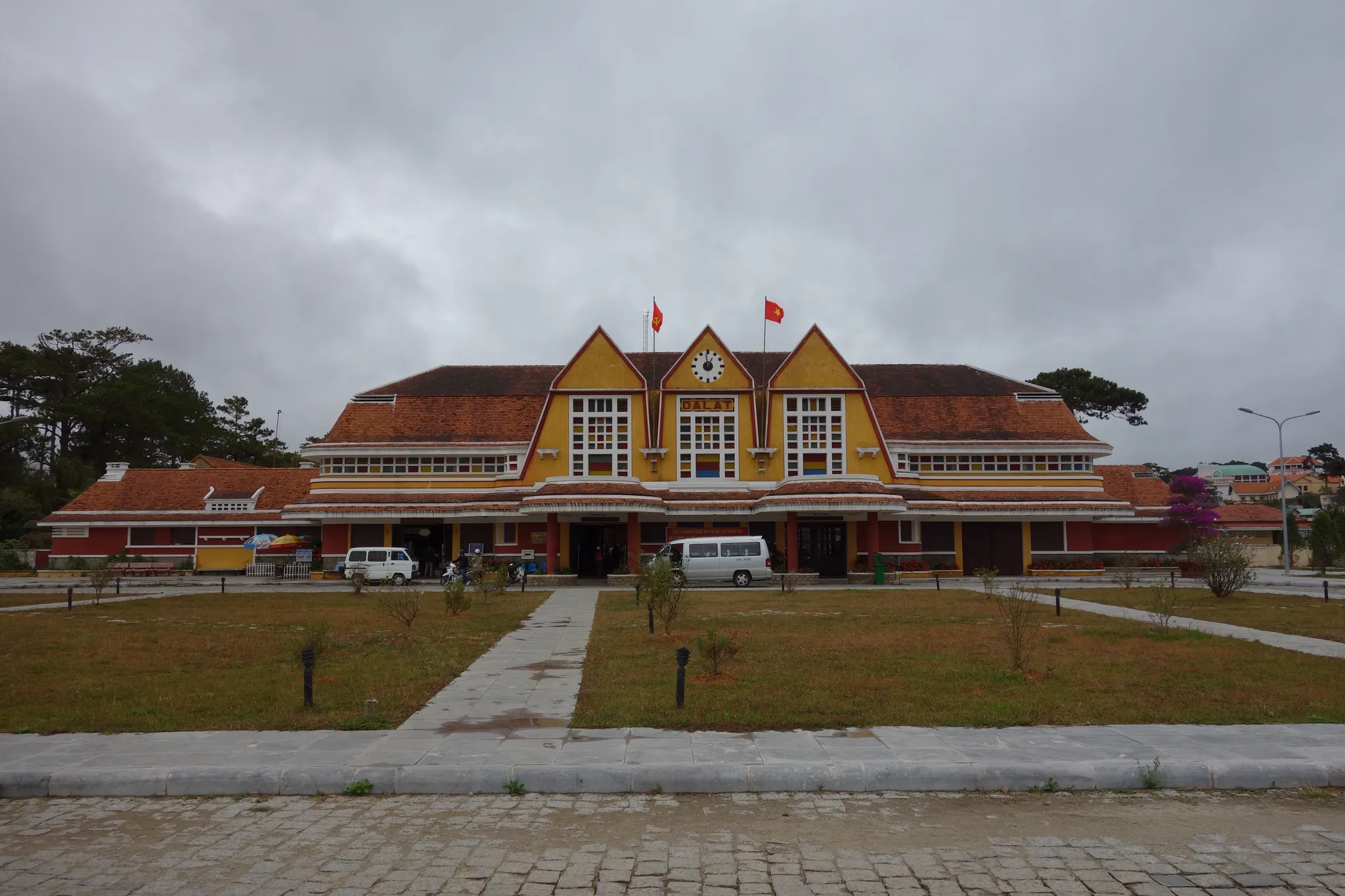
Da Lat train station is located at 1 Quang Trung street, ward 10, Da Lat city, Lam Dong province - just a few minutes from the city center. Thanks to its convenient location, you can easily get here by motorbike, private car or taxi. If coming from Da Lat market, cross Ong Dao bridge, continue along Tran Quoc Toan street towards Lam Vien square. Then turn onto Yersin Street, pass Nguyen Trai, then go straight to Quang Trung and you will reach your destination.
1.2. Operating hours and tour ticket prices
Da Lat Station is open to welcome passengers from 7:30 am to 5:00 pm daily. Visitors can freely visit, take photos, and explore the station’s ancient architecture with an entrance ticket of 50,000 VND/person (since 1 October 2024; children under 6 or under 1.32 m go free, per Tuoi Tre). Note, ticket prices and time frames may change from time to time, you should contact the management board in advance to get the most accurate information.
1.3. Is Da Lat Station still operating?
Yes, though no longer as part of the national rail network. Da Lat Station still runs a short heritage tourist line from the city out to Trai Mat station, about 7km away. The trip takes roughly 25 minutes each way through pine forest, flower gardens and the greenhouses that cover the hillsides.
The end of the line sits beside Linh Phuoc Pagoda (the “Ve Chai” pagoda), known for its mosaics of broken pottery, porcelain and glass bottles. The train waits about 30 minutes at Trai Mat before heading back.
What time do the trains run? Daytime services run roughly every two hours, the earliest leaving around 7:30 – 8:00. There are also two night trains departing Da Lat Station at 18:15 and 20:20 — the best window if you want to watch the train lights move across a dark valley.
- Daytime services: from about 7:30 until late afternoon, roughly two hours apart; fares depend on the carriage, so check with the station.
- Night trains at 18:15 and 20:20: 72,000 – 100,000 VND per leg (as announced in April 2024, VietnamPlus), passing Trai Mat after about a 25-minute run.
- Discounts: 25% off return tickets and 15 – 40% for groups of 10 or more (as announced in April 2024); ask the station about children’s fares.
One important caveat: the train only departs once enough passengers have booked, usually 15–20 people, so the timetable shifts by season and by day. Call Da Lat Station on +84 263 3834 409 to check that day before you go.
If you only want to watch the train rather than ride it, you can sit at one of the restaurants in Trai Mat at the end of the line — see our guide to Da Lat BBQ with a train view.
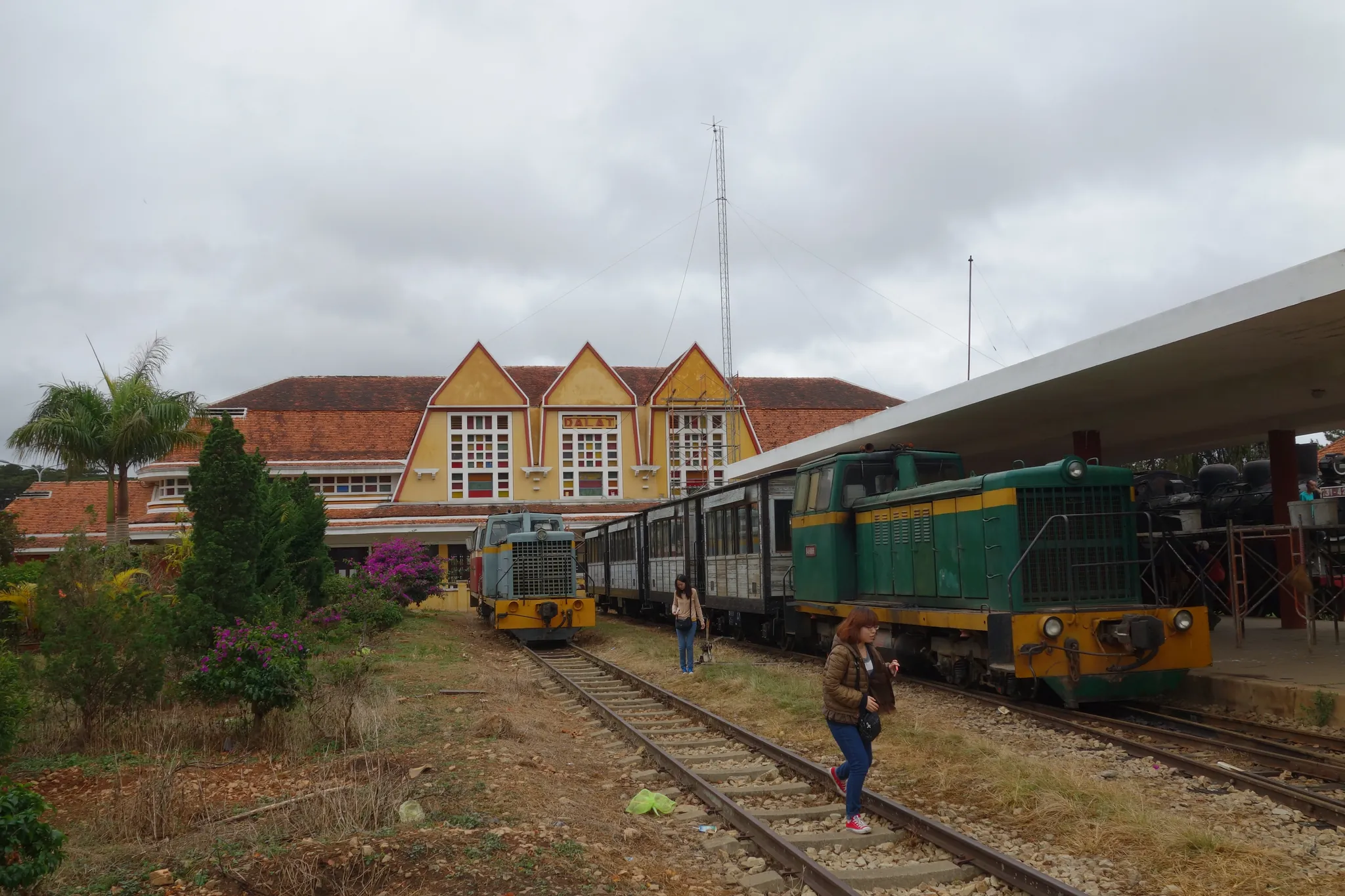
This line runs to Trai Mat, passing Xom Leo. The two night departures leave at 18:15 and 20:20 — see when the train passes the restaurant if you want to watch one go by over dinner.
1.4. Standout features of Da Lat train station
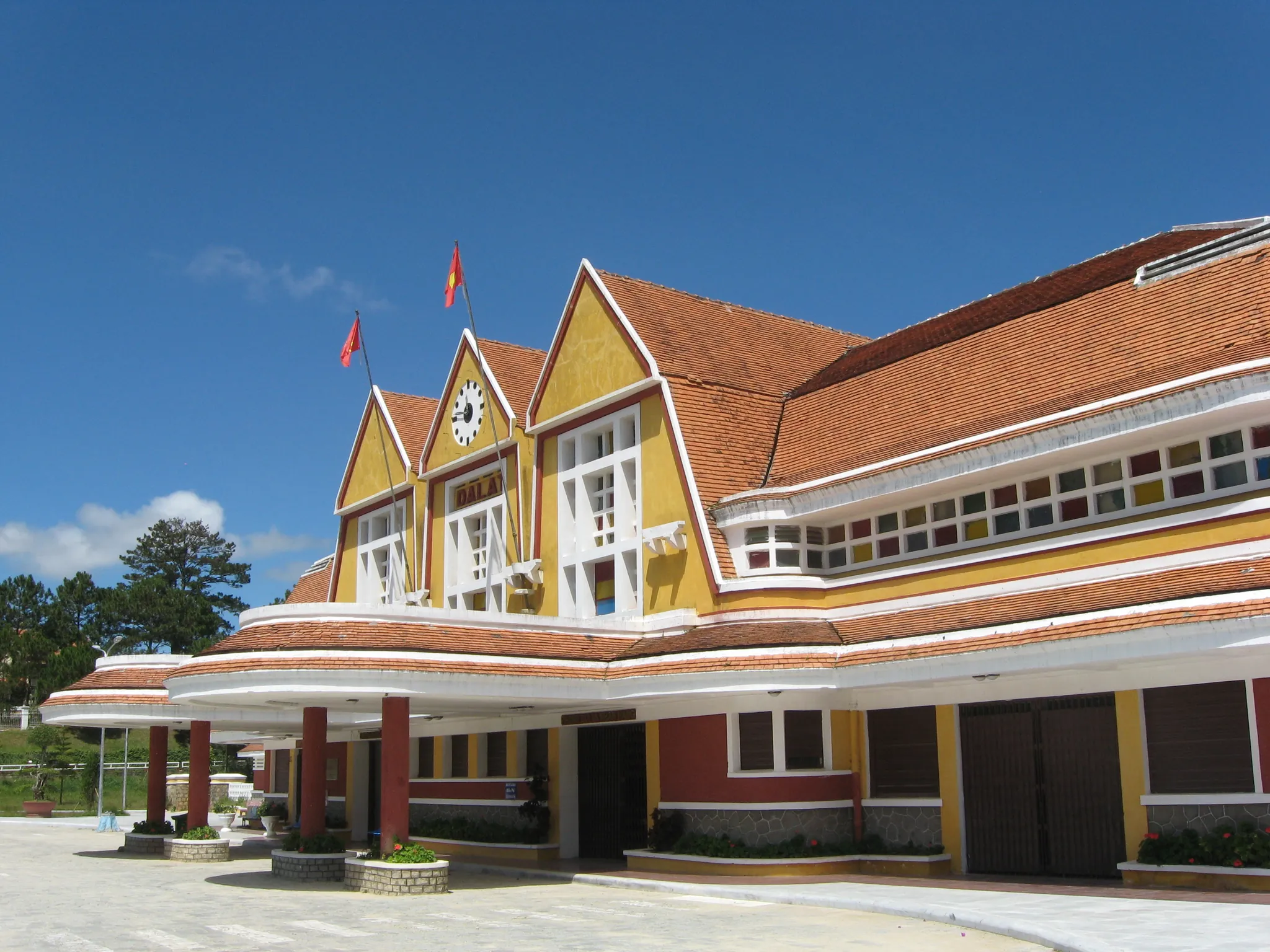
Beyond its historical significance, Da Lat Station also has many standout features:
-
It is the starting station of the Da Lat – Trai Mat tourist train.
-
Possessing classic French architecture, it is known as the most beautiful train station in Indochina.
-
With an altitude of about 1,500m, it is the highest station in Vietnam.
2. When was Da Lat train station built?
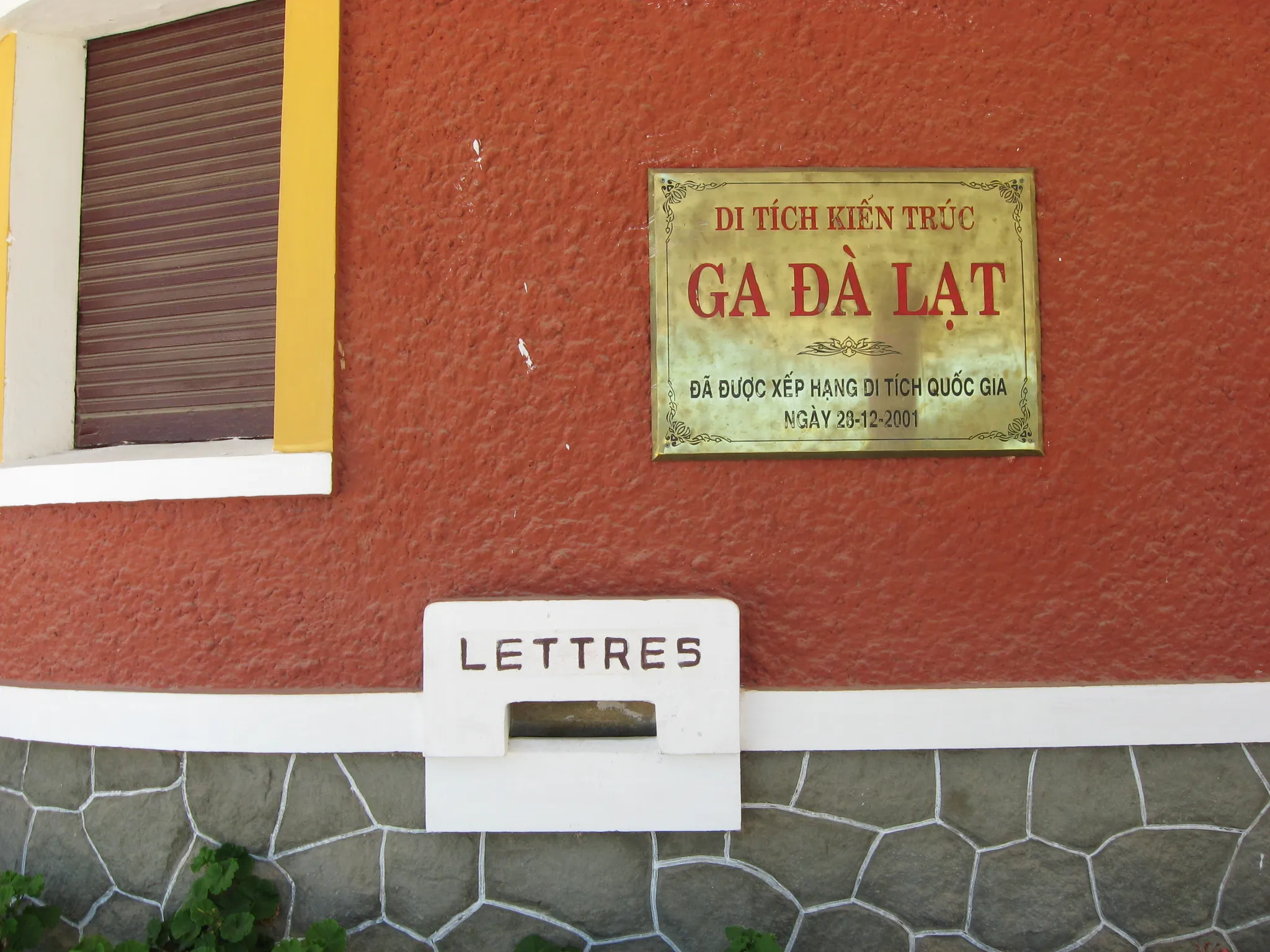
Construction of Da Lat train station began in 1932 and was completed in 1938, as part of the 84km long Thap Cham - Da Lat railway project, connecting the Lam Vien highland with the coastal area of Phan Rang (Ninh Thuan). Planning for this railway began in 1898 under Governor General of Indochina Paul Doumer, and construction started in 1908; the railway stands out with its complex terrain when the entire route’s altitude varies by up to 1,500m.
The project is considered one of the rare railways in the world, with 5 mountain tunnels and 16km of rack railway – a toothed rail between the running rails that the locomotive grips on steep climbs – using the Swiss Abt system (Wikipedia). Thanks to that, the train line can overcome slopes of up to 12% - an impressive number compared to conventional railway standards.
However, by 1972, the route was devastated by war and although it was temporarily restored after 1975, it quickly stopped operating due to economic ineffectiveness. Most of the rail system and related works have been dismantled, leaving only Da Lat station as a living testament to the golden age of the Indochina railway industry.
Currently, the station no longer serves intercity trains but has been converted into a famous tourist attraction, where ancient architecture and historical traces are preserved. In 2001, this work was ranked as a National Historical-Cultural Monument, becoming the pride of the foggy city.
3. Explore the unique architecture of Da Lat’s ancient train station
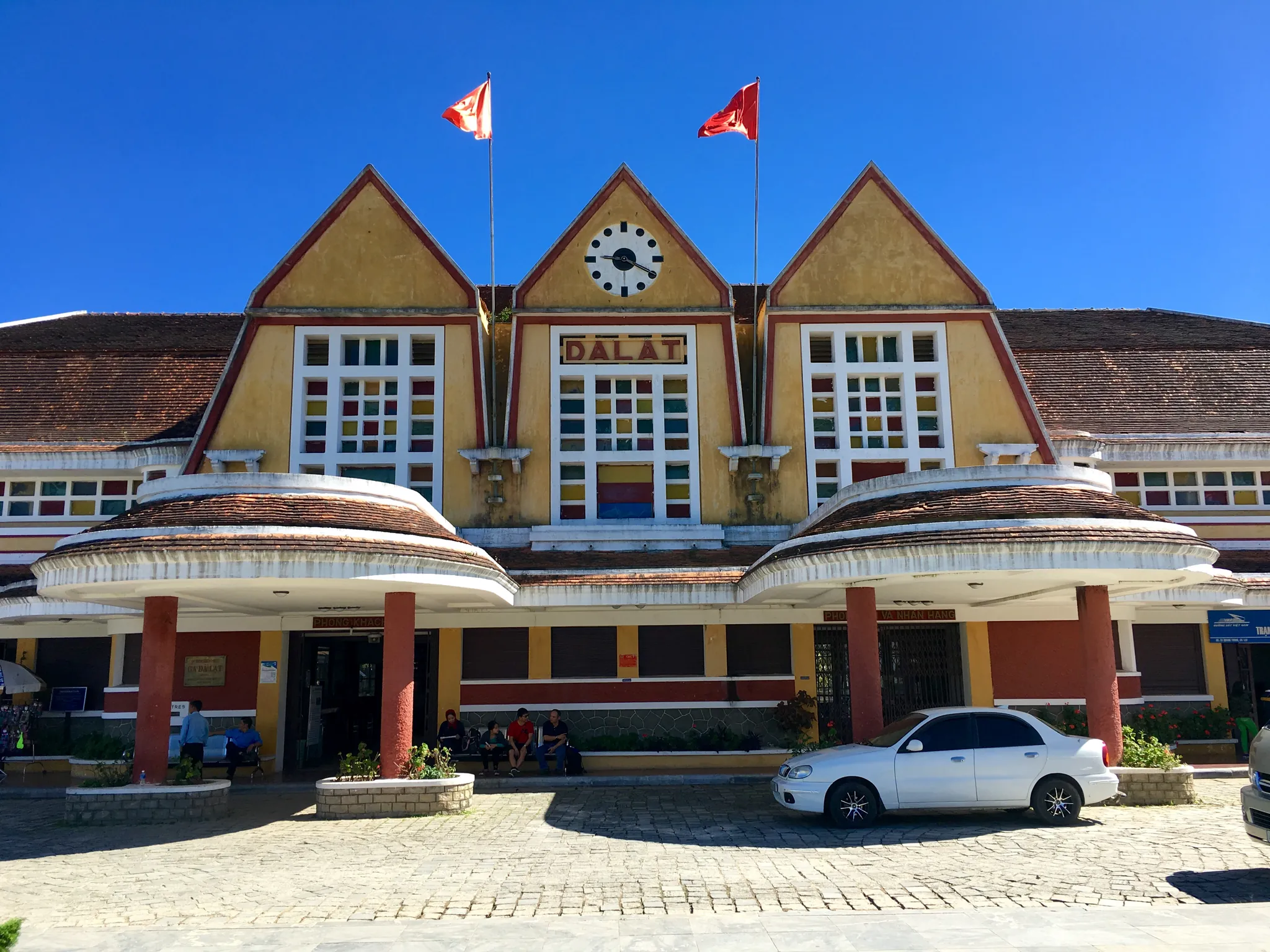
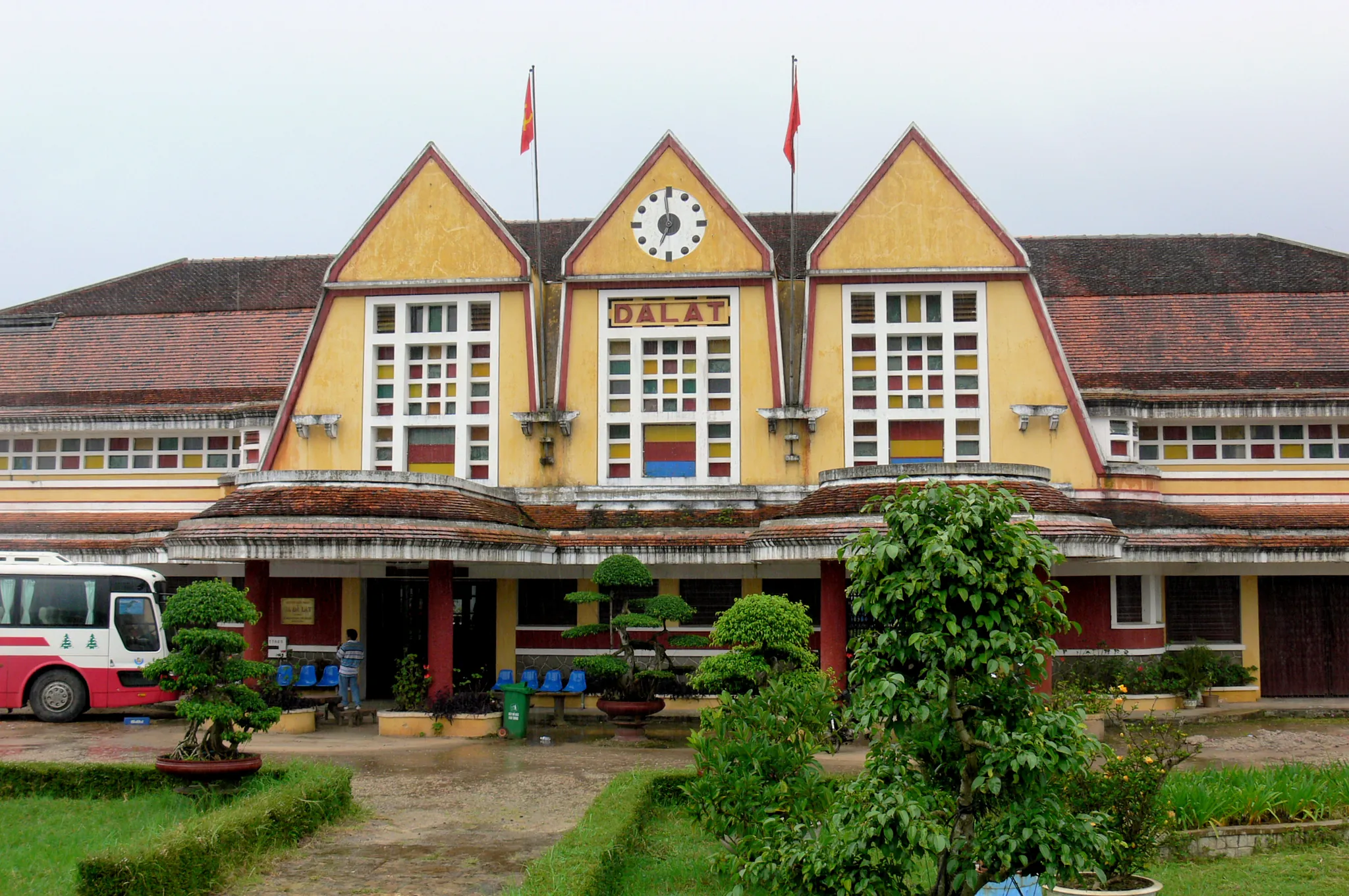
Da Lat Train Station is a unique architectural work designed by two French architects, Moncet and Revéron. The highlight of the station is the delicate combination of Western architectural style and indigenous cultural elements. The entire station layout is built symmetrically, with the central part simulating the image of the three peaks of Langbiang mountain - a famous symbol of the highlands. The pointed roof is inspired by Central Highlands communal houses, creating a harmonious whole, bearing the mark of the region.
Right in the front of the central block is a large clock face - a special detail marking the moment Dr. Yersin discovered Da Lat. Ahead are two separate halls: one for passengers waiting for the train, the other for the cargo area. The interior space is simple but scientific, clearly demonstrating French design thinking of the early 20th century. With a combination of architectural aesthetics and historical value, Da Lat Station is not only a prominent check-in point but also a unique cultural heritage of the foggy city.
4. The best photo spots at Da Lat train station
With ancient European beauty in the heart of dreamy Da Lat, Da Lat train station has long become an “outdoor studio” drawing many visitors for photos and wedding shoots. Below are the best photo spots you should not miss:
4.1. Main gate of Da Lat train station
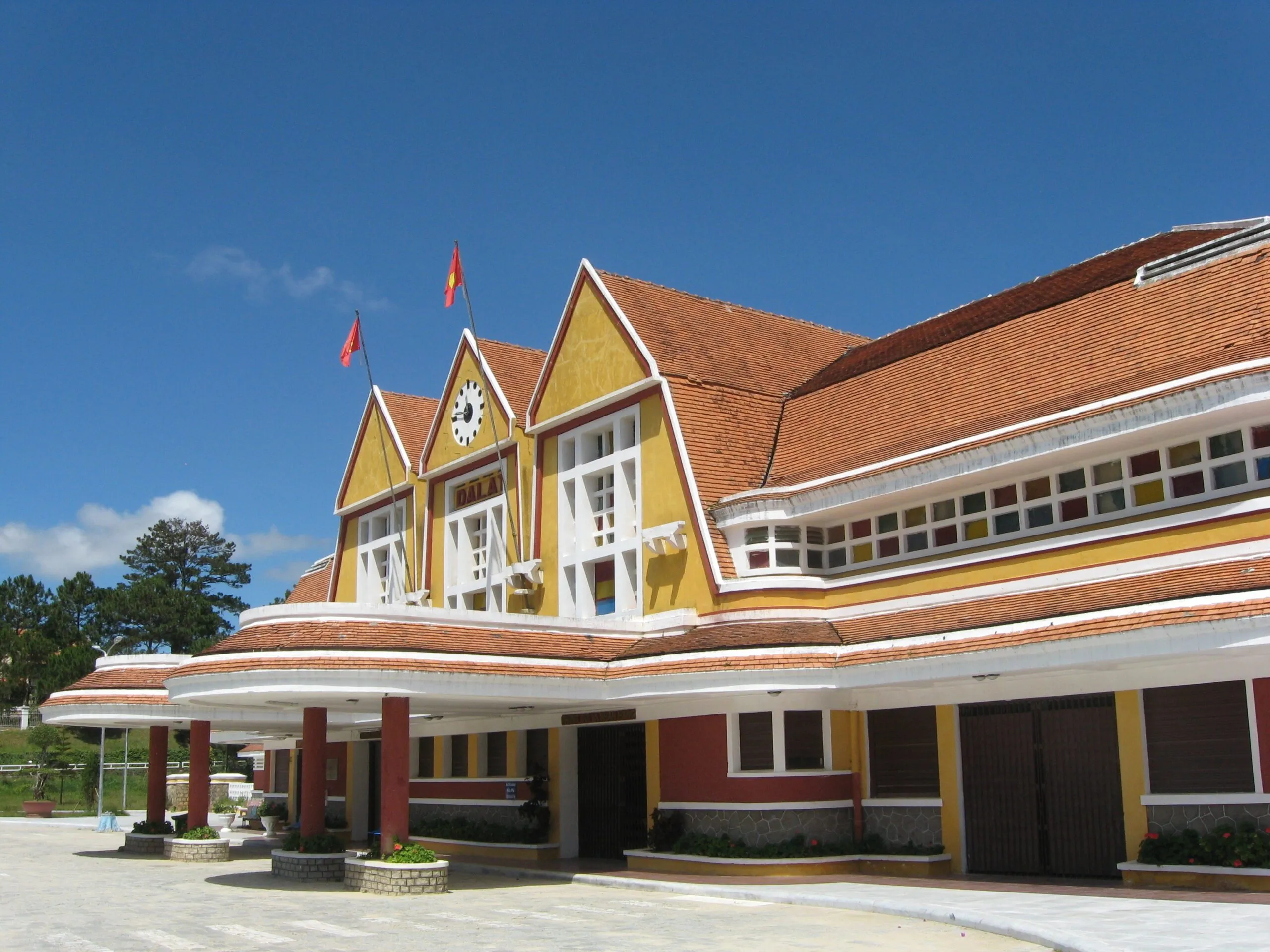
The area right in front of the gate is an ideal stop to take pictures with the background of the typical peaked roof and a large yard filled with flowers and sunshine. With just a reasonable camera angle, you will immediately have a photo that bears the mark of old Da Lat.
4.2. Ticket purchasing waiting room area at Da Lat train station
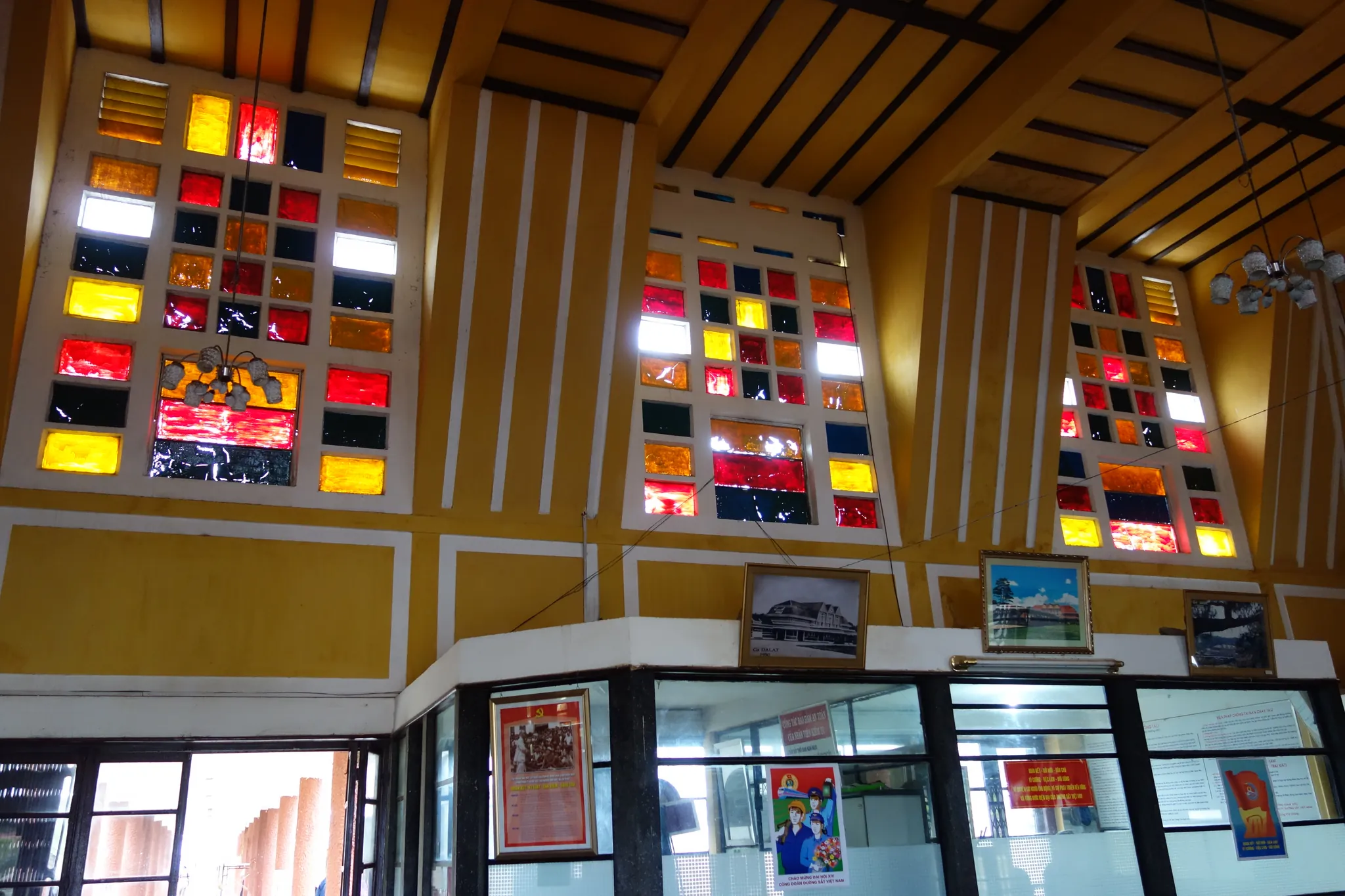
Few people know that the ticket waiting room inside the station is a very “artistic” background with old glass design, wooden tables and chairs, soft lighting and a nostalgic atmosphere. A perfect choice for those who love vintage and classic style.
4.3. Old wooden train cars at Da Lat train station
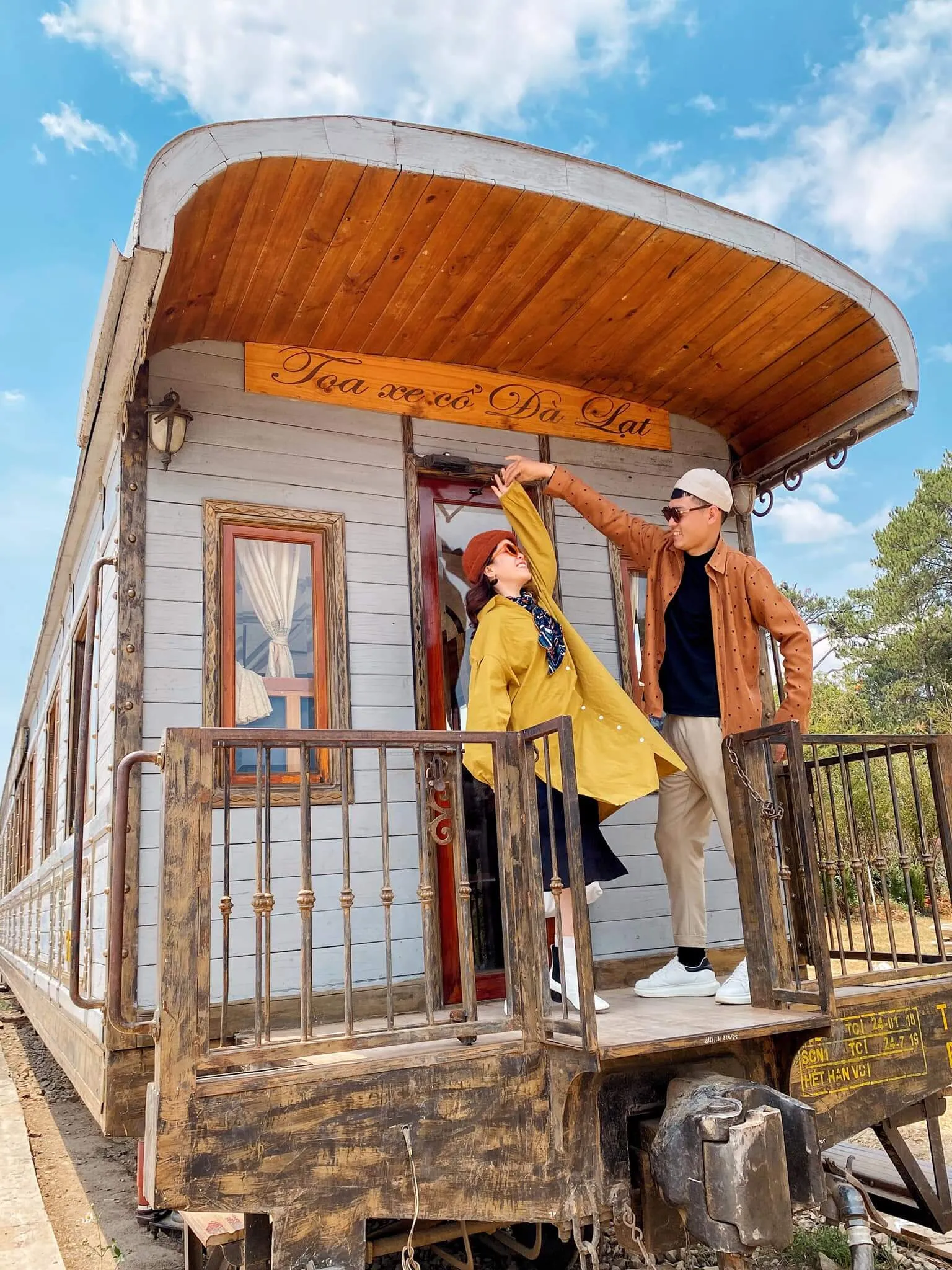
The antique wooden carriages are still carefully preserved at the station, an indispensable highlight for nostalgic photos. The deep brown color, ancient windows and Da Lat sunlight shining through create a cinematic space.
4.4. Railway track area at Da Lat train station
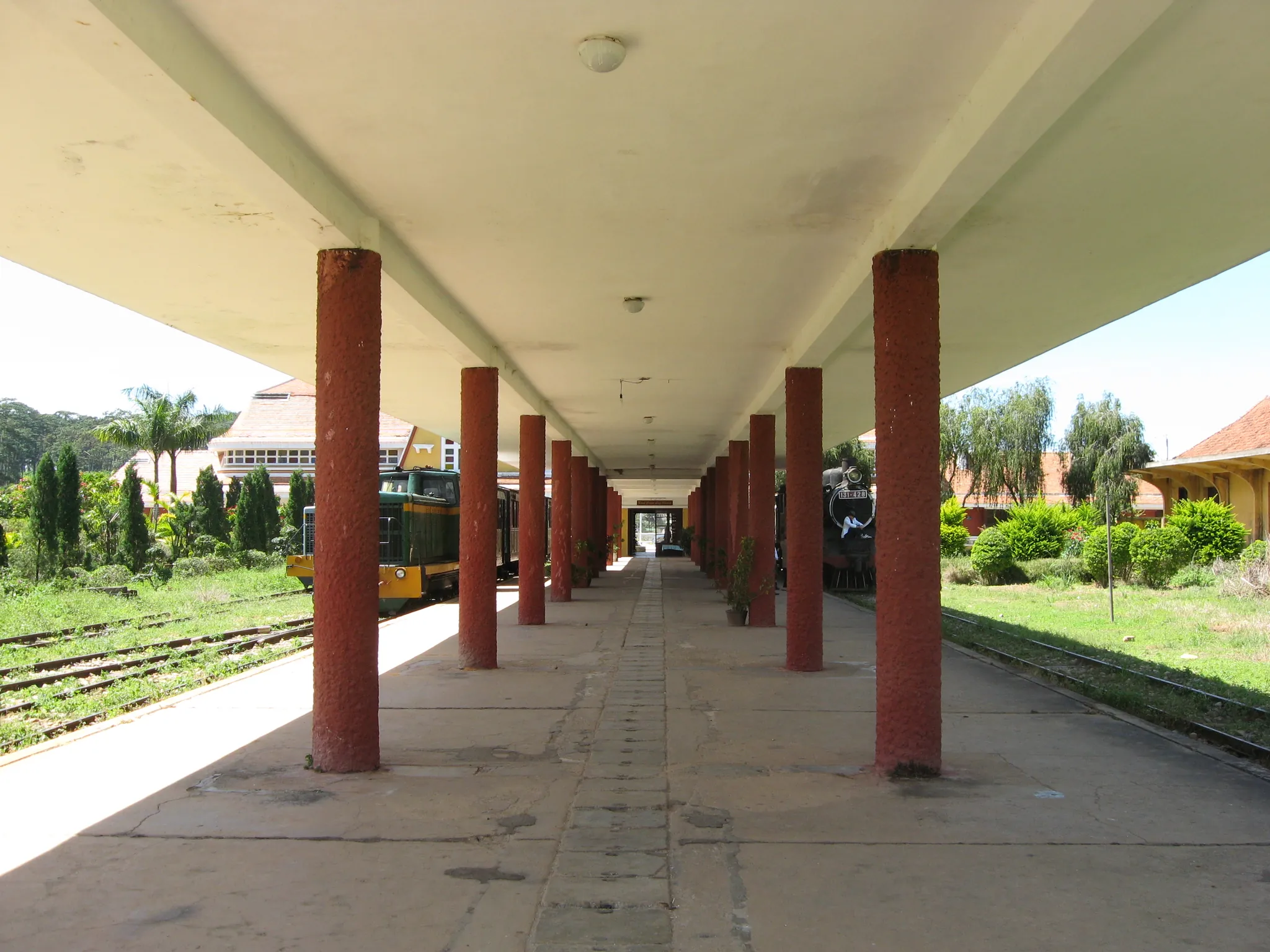
The long railway running between the open natural space, covered with green pine trees and cool breezes, is an ideal place to create photos that are both poetic and personal. Just stand along the train tracks and pose gently, and you’ll have a million-like photo.
4.5. Ancient steam locomotive - Unique symbol at Da Lat train station
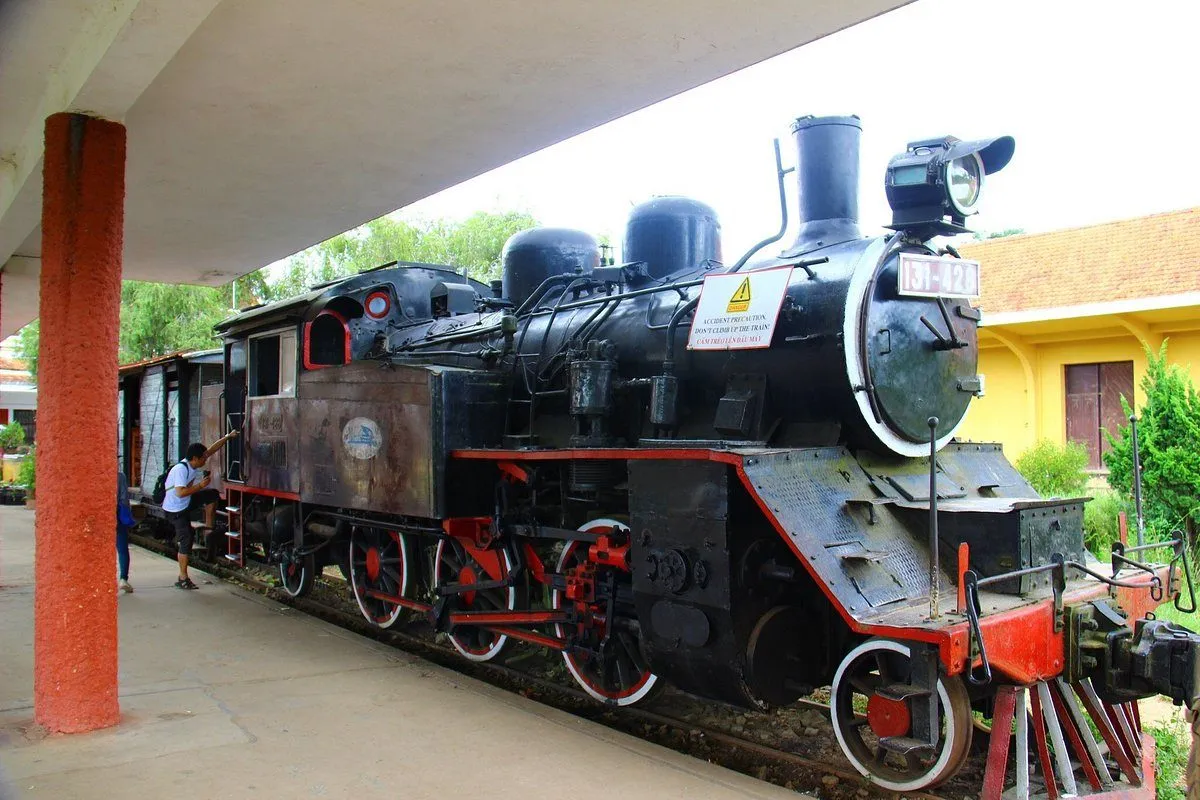
The steam locomotive displayed at the station is a prominent check-in point, with a bold retro style. This is where young people often choose to create “cool”, strong and different photos.
4.6. The space inside an ancient train car at Da Lat train station
Inside the train cars, the ancient interior is still intact: from wooden seats, glass doors to dark tones that carry the mark of time. This is the perfect “so deep” location for those who want to capture quiet, nostalgic moments in the heart of old Da Lat.

5. Suggested tourist attractions near Da Lat train station that should not be missed
After taking photos at Da Lat ancient train station, you can easily combine exploring the surrounding outstanding tourist destinations. Within just a few kilometers radius, you can fully enjoy the natural beauty, architecture and typical culture of the foggy city.
-
Lam Vien Square(about 1km from the station): Outstanding with symbols of wild sunflowers and giant artichoke buds, the square is where many fun activities, art performances take place and is also a familiar check-in point for tourists of all ages.
-
Xuan Huong Lake(about 1km from the station): As the poetic heart of Da Lat, Xuan Huong Lake provides an ideal relaxing space. You can stroll around the lake, duck, ride a horse-drawn carriage or simply admire the scenery and enjoy the mild weather.
-
Da Lat Night Market (about 2.5km from the station): This is a culinary and night shopping paradise. From grilled rice paper and hot soy milk to souvenirs and fashion, the night market is always vibrant and colorful, suitable for exploring Da Lat at night.
-
Bao Dai Da Lat Palace(about 3km away): Palace I is an ancient villa with classic European style, hidden in the middle of a pine forest. The space here is both solemn and poetic, suitable for learning about history and preserving nostalgic photos.
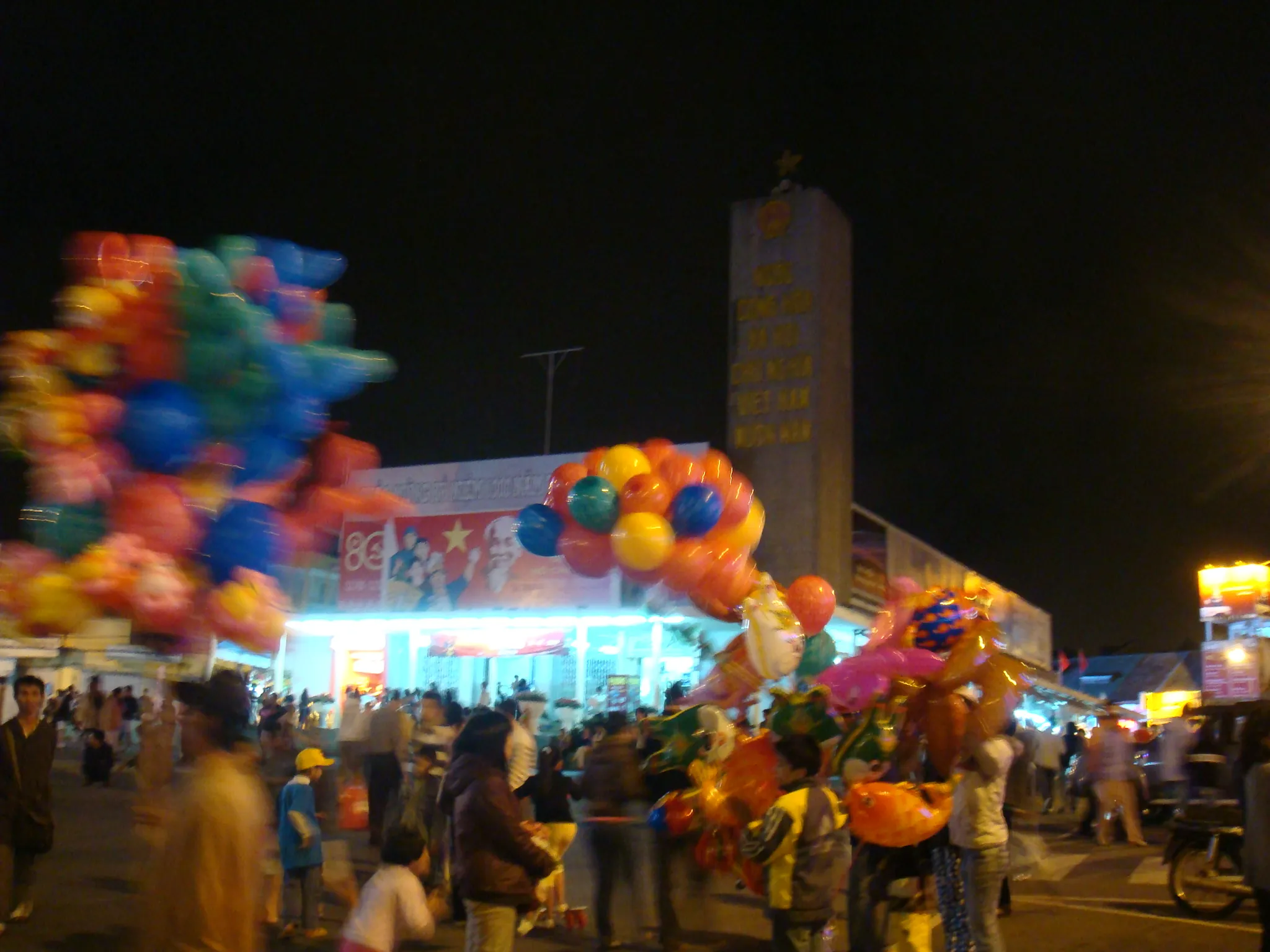
Photo: Balloon sellers and brightly lit stalls at the Da Lat night market. Source: The Erica Chang / Wikimedia Commons, CC BY 3.0
6. Suggested delicious restaurant after exploring Da Lat train station: Xom Leo Grill & Chill
After an afternoon of wandering around Da Lat train station - a place that preserves the mark of time and fairy-tale-colored train cars - if you want a place that is both cozy and has a beautiful view to rest. And Xom Leo Grill & Chill is a “standard no need to adjust” destination.
From the restaurant’s outdoor table, you can see the train tracks in the distance gradually sinking into the sunset. As the sky changes color, the caged houses in the valley begin to light up, creating a brilliant picture amidst the chilly afternoon dew. While enjoying the fragrant grilled food on the charcoal stove, while watching the city light up, it feels truly worthwhile after a day of traveling.
If you are looking for a restaurant in Da Lat with delicious food, beautiful view, chill atmosphere to end the journey, then Xom Leo is the ideal place to stop.
📍Address: 113 Huynh Tan Phat, Xuan Truong Ward - Da Lat, Lam Dong
📞Hotline: 0764 527 336
📩Reserve Table: message to book
📍Directions: See map
If you are a large group, or Xom Leo is fully booked that evening, our sister venue Tram Dung Chill is right next door at number 111 — same team, same view over the railway and the valley, a menu of over 70 dishes and a larger outdoor area. Both open 15:00 – 23:00 and neither charges extra for a view table.
7. FAQ – Da Lat train station
❓ How much is admission to Da Lat train station?
→ Entry to the station grounds is 50,000 VND per person (since 1 October 2024); children under 6 or shorter than 1.32 m go free. That covers walking around and taking photos only; it does not include a train ticket. Prices change from time to time, so check at the counter.
❓ What are the opening hours?
→ The station is open to visitors from 7:30 to 17:00 daily. The two night trains at 18:15 and 20:20 run outside those visiting hours and depart only once enough passengers have booked, so call the station on 0263 3834 409 to check and book ahead if you want to ride one.
❓ How long is the Da Lat – Trai Mat trip and where does it end?
→ The line is about 7km and takes roughly 25 minutes each way. It ends at Trai Mat station, next to Linh Phuoc Pagoda. The train waits around 30 minutes there before returning to Da Lat.
❓ How much is a ticket on the Da Lat – Trai Mat train?
→ According to the fares announced when the night train launched (April 2024), tickets on the Da Lat – Trai Mat line cost 72,000 – 100,000 VND per leg; returns are 25% off and groups of 10 or more get 15 – 40% off. Prices may have changed, so call the station on 0263 3834 409 for that day’s fares.
❓ Can I watch the train without buying a ticket?
→ Yes. The far end of the line runs through Xuan Truong Ward, so sitting at one of the restaurants in Trai Mat lets you watch the train pass for free. See our guide to Da Lat BBQ with a train view.
❓ When is the best time to visit the station?
→ Early morning, 7:30 – 9:00, is quietest, with soft light that suits the architecture. Late afternoon, 15:00 – 17:00, gives warm light on the old carriages but is noticeably busier, especially at weekends and in high season.
Da Lat Train Station is a stop imbued with time, both ancient and poetic - ideal for those who love to explore and “hunt” for beautiful photos. After checking in and immersing yourself in the nostalgic atmosphere at the station, don’t forget to visit Xom Leo Grill & Chill to end the journey with a cozy dinner rich in mountain town flavors. A day in Da Lat will be complete when enjoying the beautiful scenery, capturing moments and gathering with friends in an emotional chill space.